Agnostics claim to know that the existence of a deity is plausible.
Uncategorized
4
Posts
2
Posters
0
Views
-
Agnostics claim to know that the existence of a deity is plausible.
As an atheist, I'm agnostic to that.
-
Agnostics claim to know that the existence of a deity is plausible.
As an atheist, I'm agnostic to that.
@selzero I honestly dislike the meaning shift that agnostic is undergoing.
Agnosticism is about knowledge. The agnostic claim is that the divine is unknown and unknowable.
This is orthogonal to belief, which is covered by theism (belief it exists), atheism in the broader (or weaker) sense (lack of belief) and atheism in the strong sense (belief that no god exists).
-
@selzero I honestly dislike the meaning shift that agnostic is undergoing.
Agnosticism is about knowledge. The agnostic claim is that the divine is unknown and unknowable.
This is orthogonal to belief, which is covered by theism (belief it exists), atheism in the broader (or weaker) sense (lack of belief) and atheism in the strong sense (belief that no god exists).
@oblomov so agnostic is based on the presumption that deities do exist?
-
@oblomov so agnostic is based on the presumption that deities do exist?
@selzero no, agnosticism is the claim that it's impossible to know, regardless of existence.
This can be a basis for strong atheism («it's impossible to know, therefore it doesn't exist», which is basically Russell's teapot argument), but is also compatible with weak atheism («it's impossible to know, and/so I don't have a particular opinion about its existence»), but also with theism («it's impossible to know, but I still believe it exists», which is actually the basis of pure faith).


Gli ultimi otto messaggi ricevuti dalla Federazione
-
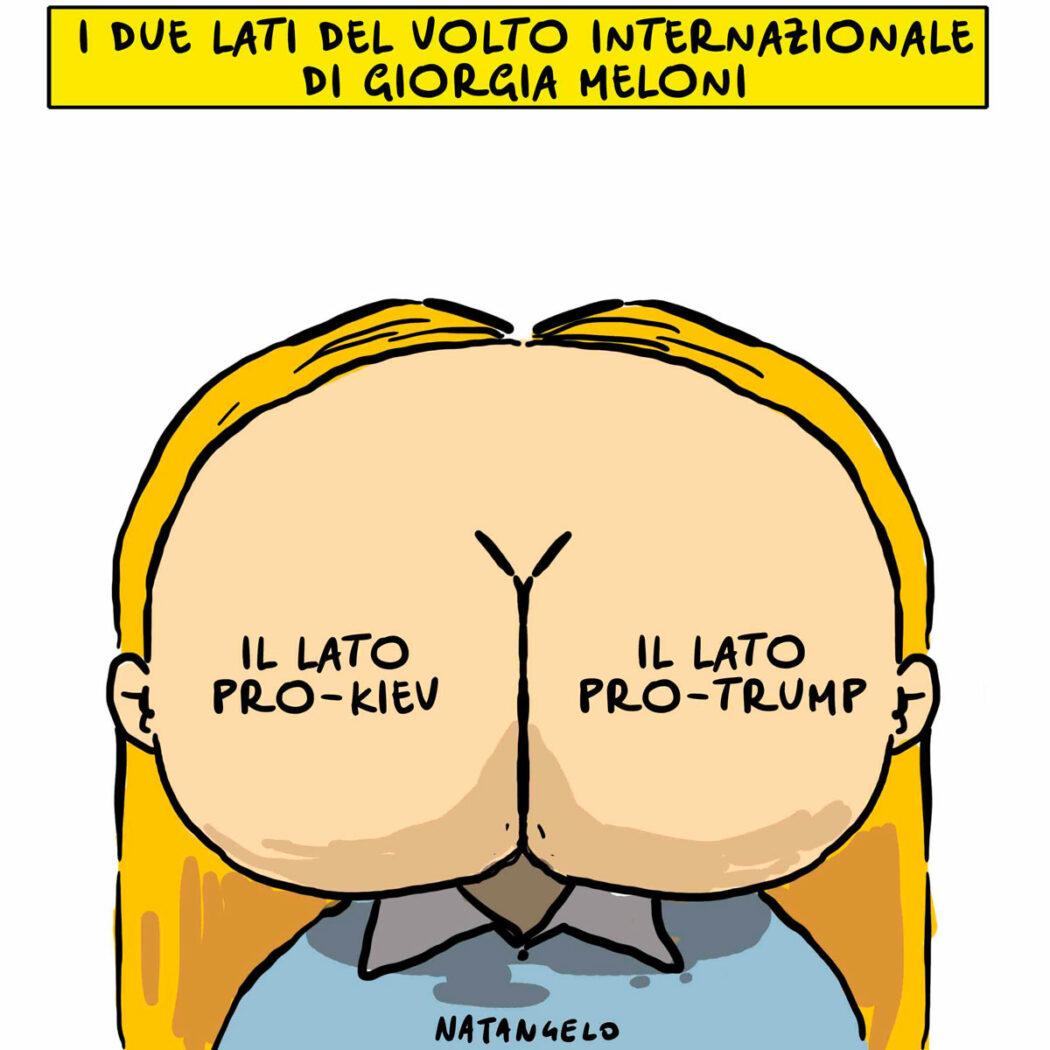
@steek_hutzee @attualita l'importante è che nella vignetta non si citino Putin/Mosca/Russia 👅
-
@Coco_Claudi @ecate85
Come ti capisco.
Io ho cominciato ad andarci dopo un crollo psicologico a seguito della diagnosi di malattia progressiva e incurabile di mamma.
Andavo soprattutto per scarsa autostima, non sentirmi importante per nessuno e una paura folle dell'abbandono e della solitudine.
Dopo 7 anni di terapia, vinto un concorso pubblico, mi scrive che non può più seguire tutti i pazienti e che ne avrebbe passati alcuni a colleghi. E che mi avrebbe dato il nominativo di un collega ⬇️
-
@Coco_Claudi te la butto lì non conoscendoti e partendo dal presupposto che siamo tuttə diversə. Dopo 3 tentativi andati male ho svoltato con un percorso di danzaterapia (non devi saper danzare).
-
@ernestas
The results are somewhat hard to read because there were separate votes for smaller parts of the document: https://www.europarl.europa.eu/doceo/document/PV-10-2025-12-18-RCV_EN.html
I think the last section 6.10 is the important one, I’ll have to check in more detail after work to make sense of it 🤓
-
Se avete fretta, leggete solo l'ultima risposta:
Daprà, Moneyfarm: «La Tobin Tax danneggia le Pmi e ridurrà le Ipo su Piazza Affari» https://www.ilsole24ore.com/art/dapra-la-tobin-tax-danneggia-pmi-e-ridurra-ipo-piazza-affari-AIJxejS
-
E niente.
Me ne sono andata.
Ricominciare la ricerca di una nuova psicologa o psicologo 👍
-
Tutte le conseguenze telefonate della crisi della Ram
Per vedere altri post come questo, segui la comunità @informatica
Sam Altman e gli altri attori nel comparto dell'Intelligenza artificiale sono affamati di memorie e ne stanno accaparrando in enormi quantità lasciando il resto del mercato senza Ram. Una situazione che rischia di costare parecchio ai consumatori nel 2026
-
@dcoderlt who the f... voted against? o_O